LinkedIn formats ·
LinkedIn Live in 2026: when it pays off, when it's noise and how to run it
LinkedIn Live has been on the platform since 2019 and has been through two waves of over-expectation and two of disappointment. In 2026 it sits in an in-between phase: the format is still available, some profiles use it with real return, and many try it once, it does not work, and they abandon it without understanding why. The key is not the format itself but what you use it for and how you structure the conversation afterwards.
This article explains when betting on LinkedIn Live pays off, when it is pure operational noise, and what production pattern turns a live broadcast into three weeks of derivative content with reinforced authority.
By Sheena de PunkVoice · Edited by Mario Pérez
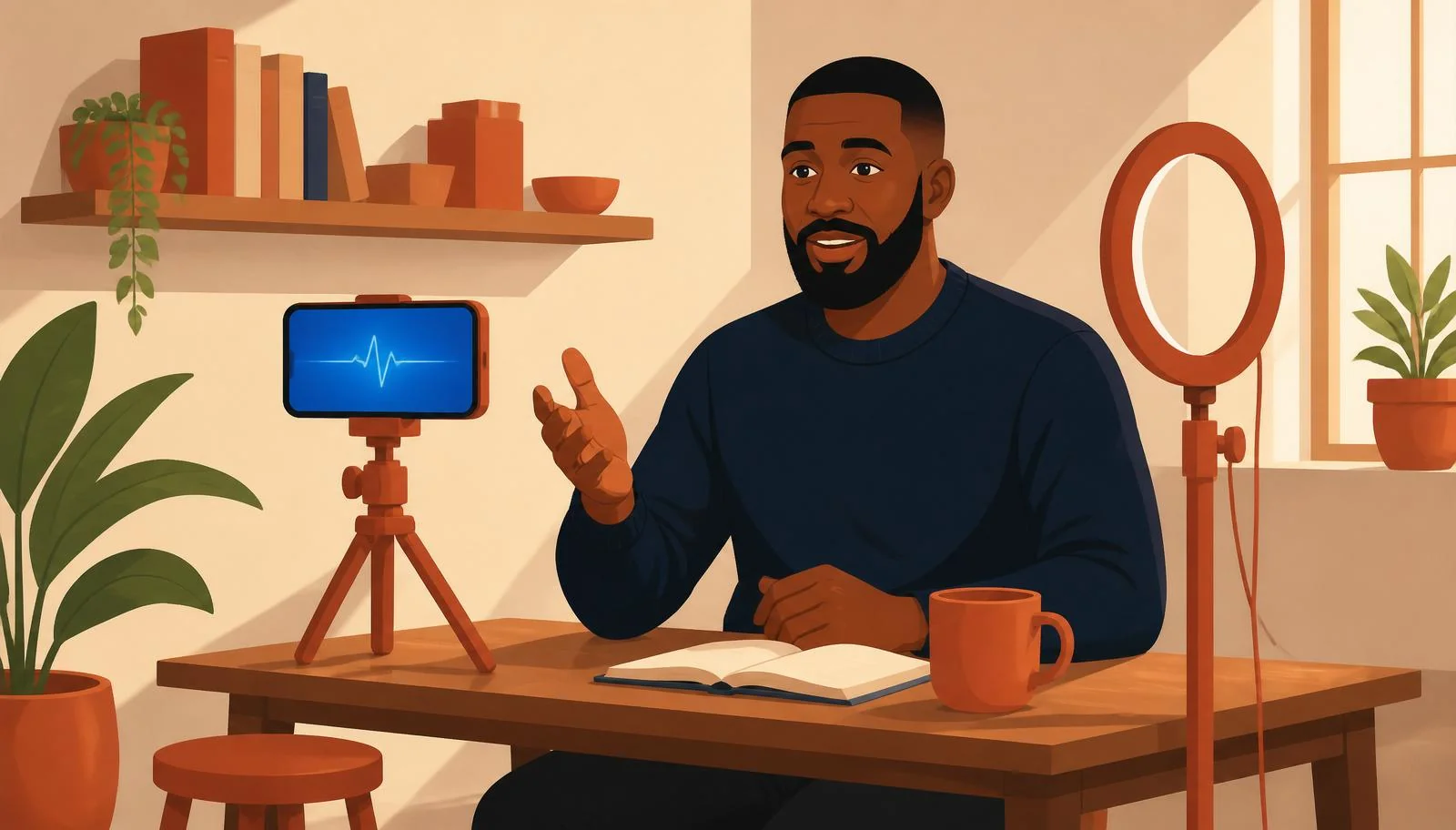
What it is and how LinkedIn distributes it in 2026
LinkedIn Live lets you broadcast video live from a personal account or a company page, with automatic notifications to connections who follow the profile. After the broadcast, the recording stays available as a standard feed post and can keep generating reach for days or weeks.
In 2026 the algorithm treats LinkedIn Live with a different logic from pre-recorded video: it prioritises reach at the moment of broadcast (a push notification to active followers), penalises broadcasts with very low initial audience (fewer than twenty viewers in the first five minutes) and rewards those with average dwell time above six minutes.
When it pays off and when it is pure noise
The most frequent mistake is betting on LinkedIn Live when your goal does not match the format's strengths. The four cases where it pays off and the three where it is operational noise are well identified.
- It pays off: launch events with a pre-warned audience (a new book, a new certification, a programme opening) where the ritual component of going live adds emotion and extra commitment.
- It pays off: conversations with guests of recognised authority where the audience shows up for the combination of two profiles. The interview format performs better than the monologue.
- It pays off: live question sessions with an already qualified audience (a community, clients, students) where being live adds interactivity a post cannot replicate.
- It pays off: recurring series with a fixed day and time that build a habit in the audience. The first edition delivers little, the fourth starts paying off, the tenth builds differentiated authority.
- It is noise: improvised broadcasts with no pre-warned audience. They go out to a cold feed and rarely pass fifty viewers.
- It is noise: hour long monologues with no interaction. Dwell time drops fast and the algorithm suppresses the recording afterwards.
- It is noise: live video as a substitute for written content. Producing a Live so you do not have to write a post costs five times more and pays off three times less.
The minimum technical production that works in 2026
The technical barrier to entry for LinkedIn Live is lower than most people think, but the details separate a broadcast that pays off from one the audience abandons in two minutes.
- Broadcasting software: LinkedIn requires compatible third party software (Restream, StreamYard, Ecamm) or Live from mobile. StreamYard is the most used standard for reasonable quality with minimal setup.
- Camera: a laptop's built in camera performs worse than a modern phone used as a webcam. The second option costs nothing and raises perceived quality noticeably.
- Audio: this is where you win or lose viewers. A lavalier microphone or headphones with a mic are the minimum. Laptop audio with no external microphone sinks retention in the first two minutes.
- Lighting: indirect natural light from a window during the day, or an affordable ring light for 30 to 50 euros for night broadcasts. An underexposed face reads as amateur and drives viewers away.
- Background: a real background (bookshelves, a wall with artwork, a real office) performs better than a virtual one. A virtual background with badly cut edges reads as unprofessional.
The editorial structure of a Live that pays off
A LinkedIn Live that produces real authority and conversation afterwards follows a recognisable editorial structure. The six blocks that work consistently are stable.
- Minute 0 to 2: a clear introduction of the topic and the format. Viewers have to know within two minutes what they will learn and why staying is worth it.
- Minute 2 to 8: context and framing of the problem with concrete data. This is where the session's credibility is built.
- Minute 8 to 25: developing the topic with three or four substantive observations. Real examples and direct mentions of the audience raise dwell time.
- Minute 25 to 40: interaction with the audience, answering written questions or bringing in guests if you have them. It is the part that separates live from pre-recorded video.
- Minute 40 to 45: an operational synthesis of three to five actionable points. The audience remembers what was said last best.
- Minute 45 to 50: a close with a concrete next action (the date of the next broadcast, a downloadable resource, an invitation to comment on the follow-up post).
The derivative content that multiplies the return
The real return on a LinkedIn Live does not show during the broadcast but over the following three weeks of derivative content. A well produced broadcast generates at least eight derivative pieces and triples the impact of the original broadcast.
- A recap post at 24 hours with the five main points and a link to the recording. It is the piece that gets the most organic reach after the Live itself.
- Three short clips (60 to 90 seconds) with the densest moments of the session. Publish them a week apart.
- A long written article that goes deeper on the topic with its own editorial structure, not a literal transcript.
- A ten slide carousel with the most quotable data and examples from the session.
- A reflection post with what you learned during the broadcast itself (which question surprised you, which idea evolved during the conversation).
- An audio segment publishable as a podcast episode if the format allows it.
LinkedIn Live as a lever, not a substitute
LinkedIn Live in 2026 is not the universal format some people sold between 2020 and 2022, but neither is it the dead format others diagnosed in 2024. It is a specific lever that pays off when there is a pre-qualified audience, a topic with enough density for 40 to 50 minutes and the capacity to produce derivative content over the following three weeks.
The discipline before betting on Live is answering three questions: do I have enough audience for the start of the broadcast to have a presence? do I have a topic that holds 45 minutes with real density? can I spend three or four hours producing the derivative content in the following ten days? If any answer is no, a good long written post pays off far more.