AI and LinkedIn ·
Generative pattern aversion: why your brain rejects content that "smells like AI"
You are running your finger down the feed and suddenly you stop at a post and think "this is AI". You have not read the text through or paused on the image. Something in its texture made you disconnect before you reasoned about it. You lose interest all at once, keep scrolling and could not even explain what you noticed.
I have given that reaction a name: generative pattern aversion, or GPA. And I want to make one thing clear from the first line, because it is the most misunderstood part. GPA works as a perceptual reaction, almost a syndrome, that forms on its own in your head through sheer exposure. Nothing to do with an ideology or with campaigning against artificial intelligence.
It is an idea I am exploring with an open study, still under way. Here is the readable version: what it is, what triggers it and why it affects you even if you use AI every day.
By Mario Pérez
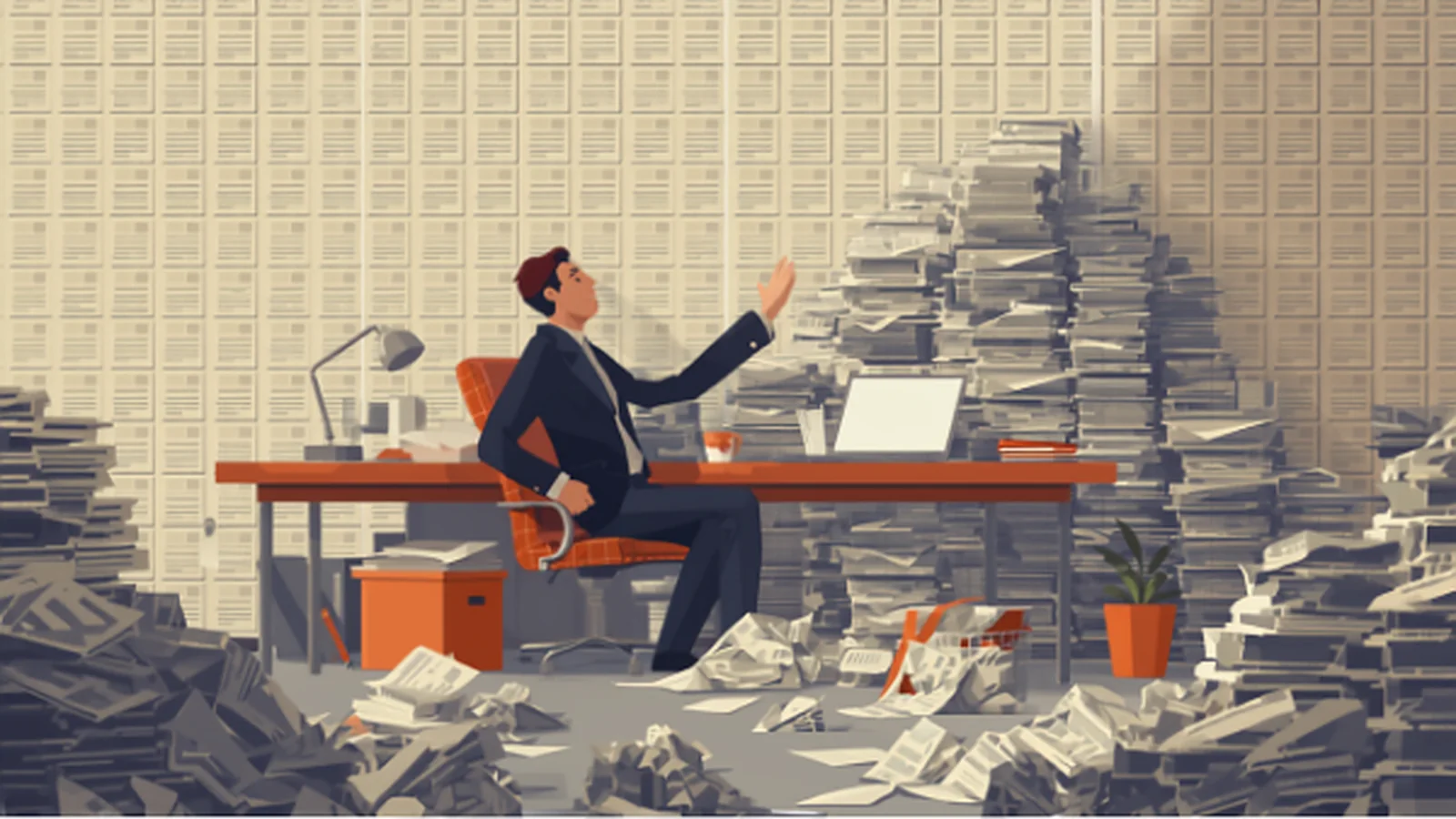
A perceptual reaction that fires on its own
First, to place it properly. GPA is not born of rejecting the tool. It has nothing of activism or moral judgement in it, and it certainly does not amount to "AI is bad". In fact it appears more strongly in people who use AI daily than in those who fear it from a distance.
It happens before you get to think anything. The rejection fires in the first seconds, in the territory of perception, long before any argument. That is why I call it almost a syndrome. It appears on its own, without your deciding it, like a reflex.
Put in one sentence, GPA is a complaint from your attention. What the reader shouts inside is "my attention no longer tolerates this repeated texture", and that weighs more than any debate about whether artificial intelligence is good or bad. The content's texture is what activates it. It makes no difference who made it: if the texture is the usual one, it fires.
What triggers it: the content's fingerprints
The reaction activates on recognising the fingerprints. After months of exposure, the brain has learned a repertoire of signals and detects them at dizzying speed. These are the most recognisable.
- Texts that are too predictable. You can see the sentence coming, there is not one unexpected turn, everything fits with a neatness that says nothing.
- Images with a synthetic aesthetic. That plastic sheen, the perfect lighting, the sense of a reheated catalogue.
- Scripts and speeches with no human friction. Zero edges, zero doubt, zero error. And where there is no friction, we suspect there is nobody.
- A falsely emotional tone. Plenty of life lessons and no concrete experience behind them holding them up.
- Traced structures. The same opening, the same list of three, the same textbook closing question, repeated to the point of tracing paper.
- Content produced with no judgement or review. It goes out exactly as the model spat it out, with nobody having thought about it or filtered it.
How it forms: from enthusiasm to defence
The underlying hypothesis is simple. At the start, generative content produced novelty. It was surprising, efficient, even fun. That phase buys tolerance, but it expires.
With repeated exposure, the brain learns the regularities. It starts anticipating the pattern before it finishes looking. And when a signal repeats endlessly, it stops processing it as new information and files it as noise. It is pure attention economics: your head builds a defence to avoid spending energy on something it has already classified as expendable.
That is the turn. What used to be experienced as innovation comes to be experienced as saturation, and even as falseness. The same texture that caught your attention a year ago now closes it, because your tolerance threshold has moved.
What it feels like: tiredness, distrust and rejection
GPA is experienced as a sensation. Tiredness, first: an immediate reluctance to keep reading. Distrust, next: if this was produced with no effort, why would I trust what it says. And, in its most intense form, an almost visceral rejection, that "not this again" you feel before you can justify it.
This changes the rules of attention. Your reader arrives at your content with a perceptual filter already active, one that discards first and asks later. If your piece fires the pattern, you lose them at first glance, however good what you had to say.
Why it affects you even when your content is honest
And here comes the uncomfortable part for anyone who creates content. Because the reaction fires on the fingerprint, you do not need to have used AI to pay the price. It is enough for your content to be wearing that texture.
A person can write something of their own, by hand, from their experience, but with the fashionable generative aesthetic (perfect symmetries, over-explanation, that polished, soulless tone) and receive the same rejection as a mass produced piece. GPA generates false positives: it punishes the texture over the authorship. That is why it is worth reviewing two things, whether you use AI and, above all, whether out of habit you have started writing like it.
My conclusion, and part of why I built PunkVoice, is this. The risk of using AI without judgement goes beyond "getting caught". The serious part is that your content reproduces an already saturated pattern and fires that defence in the reader. To avoid provoking GPA you have to break the pattern: judgement, friction, experience and a real review. Hiding that you use AI is no use at all if the texture is still there. What switches the alarm off again is that somebody is clearly there behind it.
How to use AI for LinkedIn without ending up sounding like AI
Take part in the study
All of this is, for now, a hypothesis, and I want to test it with data. That is why I have opened an exploratory study on how we perceive content generated with artificial intelligence: how we identify it, how we evaluate it and how we respond to its formal patterns.
It is an anonymous questionnaire, needing no technical knowledge, of around five to eight minutes across eight blocks. Answers are handled in aggregate. If the topic interests you, taking part is the best way to help understand it better.